
The History and Architecture of the Imperial Citadel of Thang Long
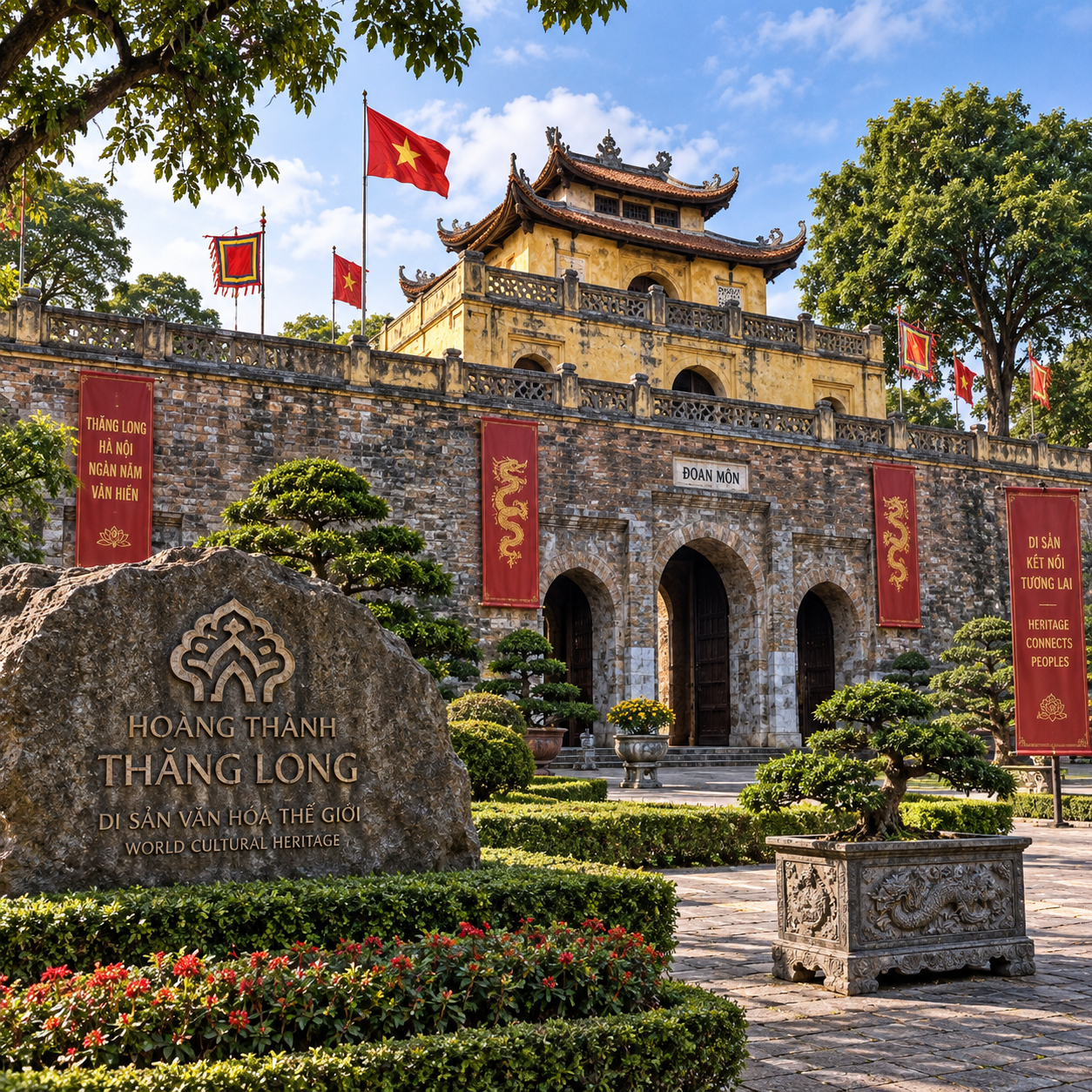
The Imperial Citadel of Thang Long is one of Hanoi’s most important historic sites, revealing more than a thousand years of Vietnamese political, architectural, and cultural development. Built and rebuilt by successive Vietnamese imperial dynasties, the complex combines visible monuments with archaeological layers that preserve traces of palaces, roads, wells, drainage systems, and everyday court life.
Its importance lies in the relationship between what visitors can see above ground and what archaeologists have found beneath it. Doan Mon Gate, Kinh Thien Palace, the Hanoi Flag Tower, and the archaeological site at 18 Hoang Dieu each represent a different part of the citadel’s long story.
Why the Imperial Citadel of Thang Long Matters
The Imperial Citadel of Thang Long matters because it was the political heart of Hanoi for centuries and remains one of Vietnam’s clearest records of dynastic change. Its monuments and excavated remains show how Vietnamese rulers governed, built, defended, and expressed power.
Located in central Hanoi, the citadel was more than a fortress. It served as an imperial residence, ceremonial centre, administrative headquarters, and military command post. From here, rulers shaped the affairs of a kingdom whose capital remained connected to the Red River plain and important regional routes.
The site also helps explain the name Thang Long, meaning “Ascending Dragon.” The name was associated with the establishment of a new capital in the early 11th century and reflected the symbolic importance of the location. Over time, the capital acquired other names, including Dong Do and Dong Quan, before Hanoi became its modern name.
Today, the Imperial Citadel is valuable precisely because it is incomplete. Some buildings survive only as foundations, while others were altered, rebuilt, or repurposed. That layered condition encourages visitors to read the site as a historical landscape rather than expecting a perfectly preserved palace complex.
From Đại La to Thang Long: The Citadel’s Historical Origins
The Imperial Citadel of Thang Long grew from the earlier Đại La Citadel and became a permanent political centre when the Ly Dynasty established its capital at the site in the early 11th century. This transition connected an older regional stronghold with the foundations of an imperial capital.
Đại La was associated with Chinese-administered and local political authorities before Vietnamese independence was firmly established. Its position near the Red River made it strategically useful, while the surrounding plain offered space for settlement, agriculture, transport, and administration.
In 1010, Ly Cong Uan, later known as Ly Thai To, moved the capital from Hoa Lu to the Đại La area and renamed it Thang Long. The decision marked a major shift in Vietnamese state development. Hoa Lu had offered defensive advantages among limestone mountains; Thang Long provided a broader setting for administration and expansion.
The Ly Dynasty developed the capital with ceremonial and residential zones, defensive boundaries, waterways, and religious buildings. Much of the original architecture no longer stands, but excavations have identified substantial evidence of planned construction, decorated ceramics, roof tiles, and architectural foundations.
Rather than a single building, the early citadel was a changing urban complex. Its layout responded to political needs, religious beliefs, topography, and the practical demands of supporting a royal court.
The Citadel Through Vietnam’s Dynasties
Successive Vietnamese imperial dynasties reshaped the citadel according to their own political priorities, leaving overlapping architectural and archaeological layers. The Ly, Tran, Le, Mac, and Nguyen periods each contributed to the site’s changing form and function.
Ly and Tran dynasties
Under the Ly Dynasty, Thang Long became the centre of a more unified Vietnamese court. Palaces, audience halls, gardens, religious buildings, and service areas developed around the royal precinct. The Tran Dynasty inherited and expanded this capital, although warfare and natural disasters periodically damaged the complex.
Archaeological evidence from these periods includes foundations, large roof tiles, decorative ceramics, and construction materials that indicate buildings of considerable scale. These discoveries help fill the gap between historical records and the limited number of structures still visible above ground.
Le and Mac periods
The Later Le Dynasty restored Thang Long as a major royal centre after periods of political conflict. The citadel’s ceremonial architecture became especially important, with grand gates and palace spaces expressing the authority of the court. The Mac Dynasty and subsequent rival powers also occupied and modified the capital, adding further layers to its history.
Nguyen Dynasty and modern transformations
When the Nguyen Dynasty established its imperial capital at Hue in the 19th century, Thang Long lost its role as the country’s principal royal seat. The site continued to serve military and administrative purposes, however. Later construction, including French colonial and modern military facilities, changed parts of the landscape.
This succession explains why the citadel does not present one uniform architectural style. Its surviving features reflect different eras, materials, technologies, and political decisions.
Architectural Highlights of the Imperial Citadel
The main architectural highlights of the Imperial Citadel are Doan Mon Gate, Kinh Thien Palace’s surviving steps and dragon railings, and the Hanoi Flag Tower. Together, they show the citadel’s ceremonial, administrative, and military functions.
Doan Mon Gate
Doan Mon Gate was an important entrance to the inner royal area. Its brick structure and elevated central passage communicate controlled access: visitors did not move directly into the palace zone but passed through a sequence of thresholds shaped by rank and ceremony.
The gate seen today has been restored and represents a later phase of the citadel’s history. It should therefore be understood as a surviving and repaired monument, not as a completely untouched medieval gateway. Its broad archways, upper pavilion, and formal position still make it one of the clearest introductions to the imperial layout.
Kinh Thien Palace
Kinh Thien Palace once occupied a central ceremonial position. The palace building itself is no longer intact, but its stone foundation and carved dragon steps remain important evidence of the former imperial centre.
The dragons on the steps are especially significant. They belong to the visual language of royal architecture, where stairs, terraces, roof forms, and carved motifs helped organize movement and communicate status. Standing on the palace platform, visitors can better understand how the surrounding gates and courtyards related to a central audience space.
Hanoi Flag Tower
The Hanoi Flag Tower is among the citadel’s most recognizable structures. Built in the 19th century during the Nguyen period, it combines a brick base, watchtower-like levels, and a tall flagpole. Its thick walls and narrow openings reflect defensive architecture, while the national flag gives it a continuing civic role.
The tower also illustrates the difference between historical continuity and original purpose. It was constructed after the main royal capital had shifted to Hue, yet it remains strongly associated with Hanoi and the citadel’s military history.
Archaeological Discoveries at 18 Hoang Dieu
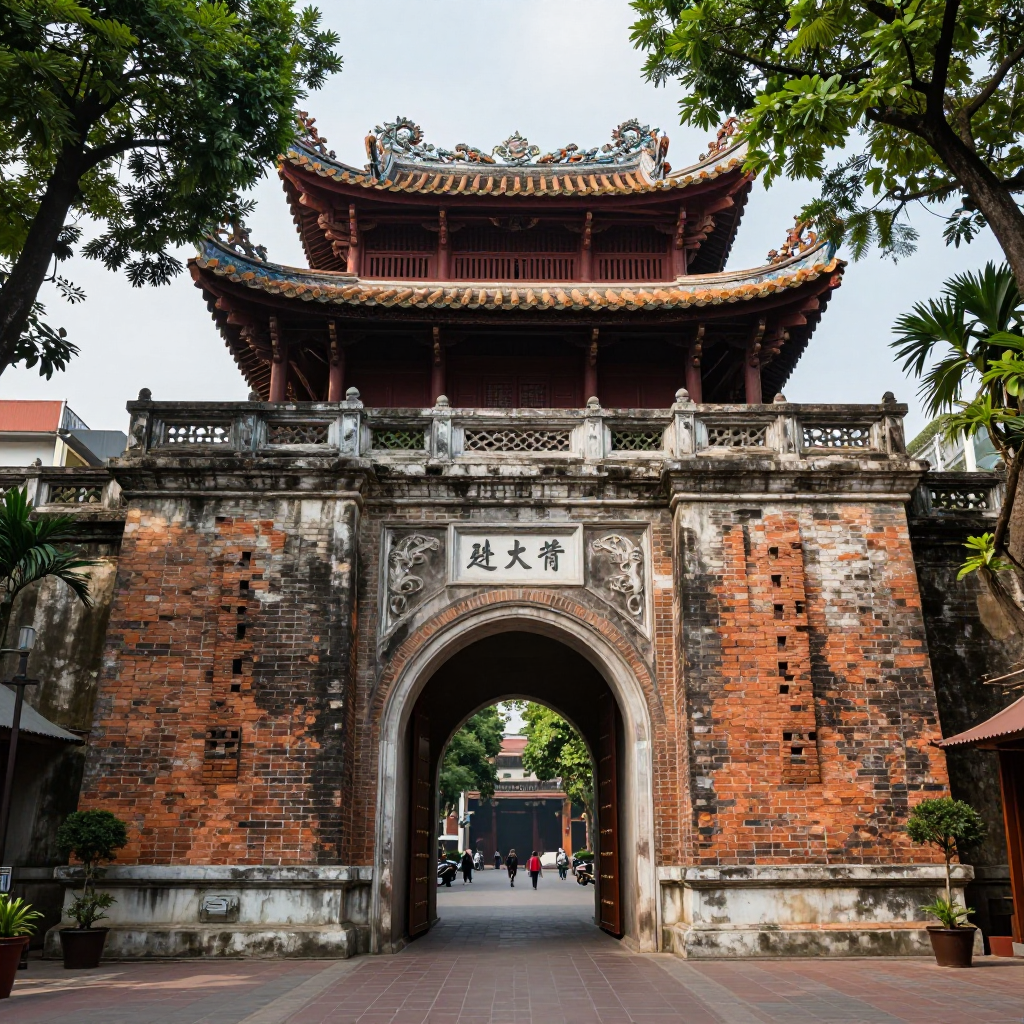
The archaeological site at 18 Hoang Dieu is important because it exposes successive layers of the imperial capital, including foundations, drainage systems, wells, ceramics, roof tiles, and other remains from different dynasties.
Excavations at 18 Hoang Dieu revealed that the area was occupied and rebuilt over a long period. Archaeologists found architectural traces associated with the Ly, Tran, Le, and later phases, creating a physical record of repeated construction on the same urban ground.
One of the most revealing features is the evidence of water management. Drains, wells, and channels show that palace life depended on carefully organized infrastructure. These systems helped move rainwater, supply residents, and protect buildings in Hanoi’s wet tropical climate.
Fragments of glazed ceramics, roof tiles, decorated architectural elements, and building foundations also provide clues about status and trade. High-quality materials suggest the presence of elite buildings and specialized craft production. At the same time, ordinary construction debris helps researchers reconstruct the practical work behind imperial architecture.
The site is best understood as a layered archive. A wall or foundation may belong to one period, while soil above it contains evidence of another. This is why archaeological interpretation requires care: a visually impressive fragment does not always represent a complete building, and reconstructed outlines should not be mistaken for fully surviving palaces.
For broader background on the site’s heritage status and historical value, visitors can consult the UNESCO World Heritage Centre’s information on the Central Sector of the Imperial Citadel of Thang Long.
Visiting the Imperial Citadel Today
To visit the Imperial Citadel today, allow roughly two to three hours and explore both the standing monuments and the archaeological areas. The site is easiest to understand when approached as a sequence from outer military structures to inner ceremonial spaces and excavated foundations.
Start with the main entrance and orient yourself on a site map before moving toward Doan Mon Gate. From there, continue to the Kinh Thien Palace area, where the surviving stone steps help identify the former centre of royal ceremony. The Hanoi Flag Tower provides a useful visual landmark and a reminder of the citadel’s later military role.
If access is available, include the archaeological exhibits and the 18 Hoang Dieu area. Look for changes in brick colour, foundation depth, drainage channels, and displays of ceramics or roof tiles. These details may appear modest, but they explain how the capital functioned beneath its grand ceremonial image.
- Best approach: combine the visible monuments with the archaeological evidence rather than visiting only the most photographed gate.
- Comfort: wear comfortable shoes, bring water, and allow extra time in hot or rainy weather.
- Photography: photograph the overall alignment of gates, courtyards, and towers, not just isolated details.
- Interpretation: use the site signage or a qualified guide to distinguish original remains from restored or later structures.
The citadel lies in central Hanoi near Ba Dinh Square and other major heritage landmarks. Opening hours, ticket arrangements, and access to individual archaeological areas can change, so check current information through the official visitor channels before travelling.
The Citadel’s Cultural and Historical Legacy
The Imperial Citadel’s cultural legacy comes from its ability to connect Hanoi’s present with the political and architectural history of Vietnam. It remains a living heritage site where archaeology, national memory, conservation, and public education meet.
For Hanoi, the citadel represents continuity through change. The capital has been renamed, rebuilt, occupied, and modernized, yet the same general urban area has continued to carry political meaning. The surviving gates and towers provide visible symbols, while the buried layers reveal a more complex history of adaptation.
The site also corrects a common misunderstanding about heritage. A historic capital does not need to survive as a complete palace city to remain significant. At Thang Long, foundations, drainage lines, carved stones, and fragments of ceramics can communicate as much about imperial life as a standing hall.
Visitors who take time to read those layers will see the citadel as more than an old military compound. It is a record of how Vietnamese dynasties organized authority, how builders adapted architecture to climate and ceremony, and how Hanoi became a cultural centre shaped by both memory and material remains.
Frequently Asked Questions
What is the Imperial Citadel of Thang Long?
The Imperial Citadel of Thang Long is a historic royal and administrative complex in Hanoi. It developed from the Đại La Citadel and served as a political centre for successive Vietnamese dynasties.
When was the citadel built?
The citadel’s earliest foundations predate the independent Vietnamese capital, but Thang Long was established as the capital in 1010 under the Ly Dynasty. The complex was repeatedly rebuilt and expanded afterward.
What are the main architectural features to see?
The main features include Doan Mon Gate, the Kinh Thien Palace foundation and dragon steps, the Hanoi Flag Tower, later military structures, and archaeological remains from the 18 Hoang Dieu site.
Where is the Imperial Citadel located in Hanoi?
The Imperial Citadel is in central Hanoi, in the Ba Dinh area near major government, cultural, and historic landmarks.
How long should visitors allow for a visit?
Most travellers should allow two to three hours. A shorter visit can cover the principal monuments, while a longer visit gives enough time to study the archaeological displays and layered foundations.